
In analysis, people talk about love.1
Encore.
About impossible, unsatisfied, lasting, fleeting, maddening, burning love…
Always ready for one more adjective, but never easy.
The narrative changes, as do the means of getting to know someone.
From La Celestina in the 15th century to marriage agencies, the problem of connecting single people for romantic purposes has always been an arduous task.
In the spirit of yesteryear, apps offer the opportunity for a "safe and easy" first approach through algorithmic calculations.
A young woman who recently started using them said excitedly that the algorithm considers her pretty because it shows her pretty people.
Regarding beauty, a new trend called Shrekking went viral on TikTok in the last quarter of 2025.
Its name refers to the character from the film that parodied princess stories.
Shrekking consists of choosing someone less attractive. This reduces the chances of romantic failure, although it can also happen that someone who considered themselves beautiful is shrekked.
This type of choice is considered toxic.
We can guess why it is called that and even say it in a literary way: "Misery acquaints a man with strange bed-fellows."2
Such misery is the result of a version of partner choice that supports the choice itself.
A version that is nothing more than a vain attempt to reduce the risk of misencounter that always surrounds matters of love.
The apps aim indeed at a sort of guarantee for a good choice.
But we know that there are no guarantees and that nothing is certain…
Love is not due to the precision of the algorithm, but to chance, to contingency.
"All love, subsisting only on the basis of the "stops not being written", tends to make the negation shift to the "doesn't stop being written", doesn't stop, won't stop."3
Thus, the contingent becomes necessary; it becomes destiny and the drama of love.
The latter condenses all forms of reproach whose origin is none other than the reflection of love in its imaginary face.
There is another.
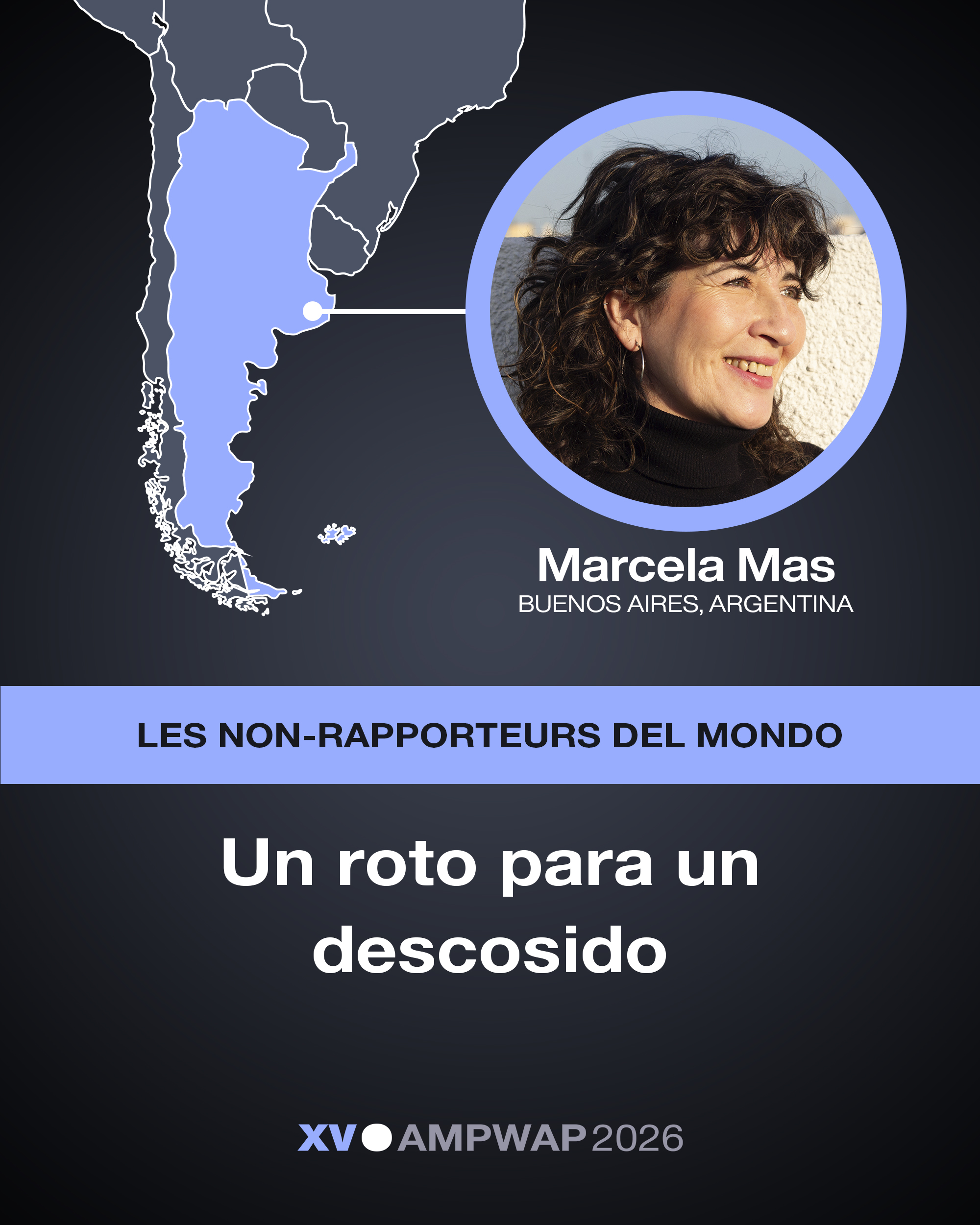
Let us use a well-known saying to describe it: "there is always a torn one for an unstitched one."
Its formula does not point to any complementarity but to two lacks that overlap. Encore.
[1] The expression "siempre hay un roto para un descosido" in Spanish can be translated as "for every pot there is a lid", "there is always someone for everyone", but literally states: "there is always a torn one for an unstitched one."
[2] Shakespeare, W., The Tempest, London: Wordsworth Editions, 1994, p. 38.
[3] Lacan, J., The Seminar of Jacques Lacan, Book XX, On Feminine Sexuality, the Limits of Love and Knowledge, New York: Norton, 1999, p. 145.
