
The use of technology in the dating field didn't begin with the apps that are widespread at the moment. In 1965 we find an early example when a group of university students created Operation Match, a computer program designed to search for partners.1 Nearly sixty years later, apps have become a common resource for facilitating encounters and, of course, misunderstandings.
A more recent phenomenon is the use of artificial intelligence to provide the keys to creating and maintaining a bond. Among the main questions asked of ChatGPT on this topic are: How can I improve communication? How can I resolve conflicts? How can I deal with jealousy? How can I know if this is the right partner for me? How can I improve my sexuality? ChatGPT, among others, has become a resource in the absence of guidance on love life and sexuality.
Another interesting scenario… Can you imagine maintaining a relationship with your partner's voice after their death? It sounds like something out of an episode of Black Mirror, but it's already a reality. This is the case of Michael Bommer,2 who―having been diagnosed with terminal colon cancer—has set out to create a digital version of himself. His wife, Anett, told him that one of the things she would miss most would be speaking with him.
The creation of representations using artificial intelligence also involves the past. Chilean artist, Felipe Rivas San Martín has taken an interest in those couples who, because they fell outside the prevailing norms, left no record behind. His work, Un archivo inexistente3 [An Inexistent Archive], features a series of fictional photographs of homosexual couples and queer or non-binary people from the working class in early 20th century Latin America.
I conclude with a few questions: If there is always a master who prescribes what sexual relations should be,4 then is it science and its technological products that are master in our time? What particularities and subjective effects does this have on relations?
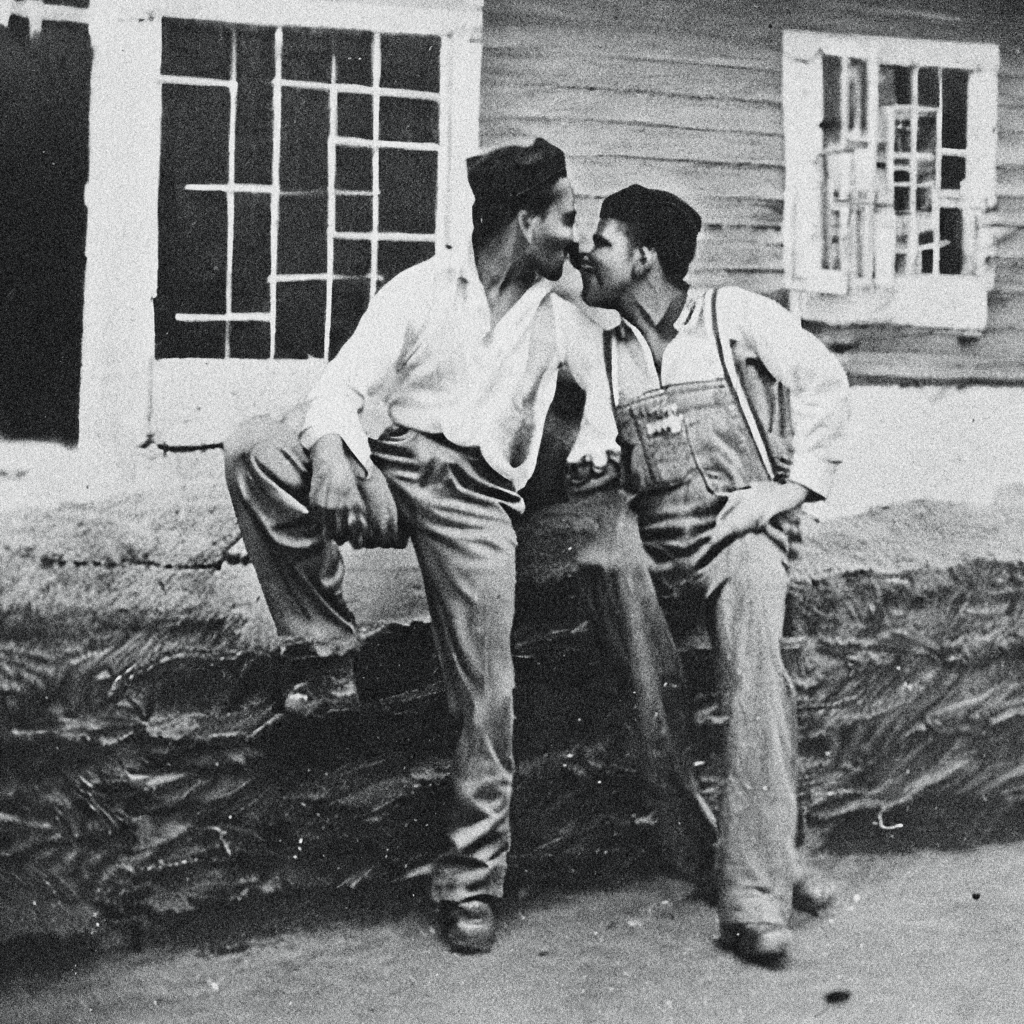
*Felipe Rivas San Martín.
[1] Erill, B., "Antes de Tinder estuvo Harvard: hace casi 60 años que la tecnología nos busca pareja" ["Before Tinder, there was Harvard: technology has been finding us partners for almost 60 years"], National Geographic, 12 October 2024, available online: National Geographic [unavailable in English].
[2] "New AI promises to take people to 'the next level' beyond death," NewsNation, 2024, available online: YouTube.
[3] Cf. Rivas San Martín, F., Un archivo inexistente, 2022-2024, available online: feliperivas.com.
[4] Miller, J.-A., (2025) "El estatus del trauma," in Tambor, Hablar con el niño, XII ENAPOL, Belo Horizonte, 5, 6 and 7 September 2025, available online: enapol.com.
