
Lacan wrote in "L'etourdit" that the real announces itself as there being no sexual relation. "This presupposes that, of relation (relation 'in general'), there is only that is stated."1 Man and woman, the Innenwelt and the Umwelt, the stimulus-response couple: statements that bring into existence the relation that there is not in the real.
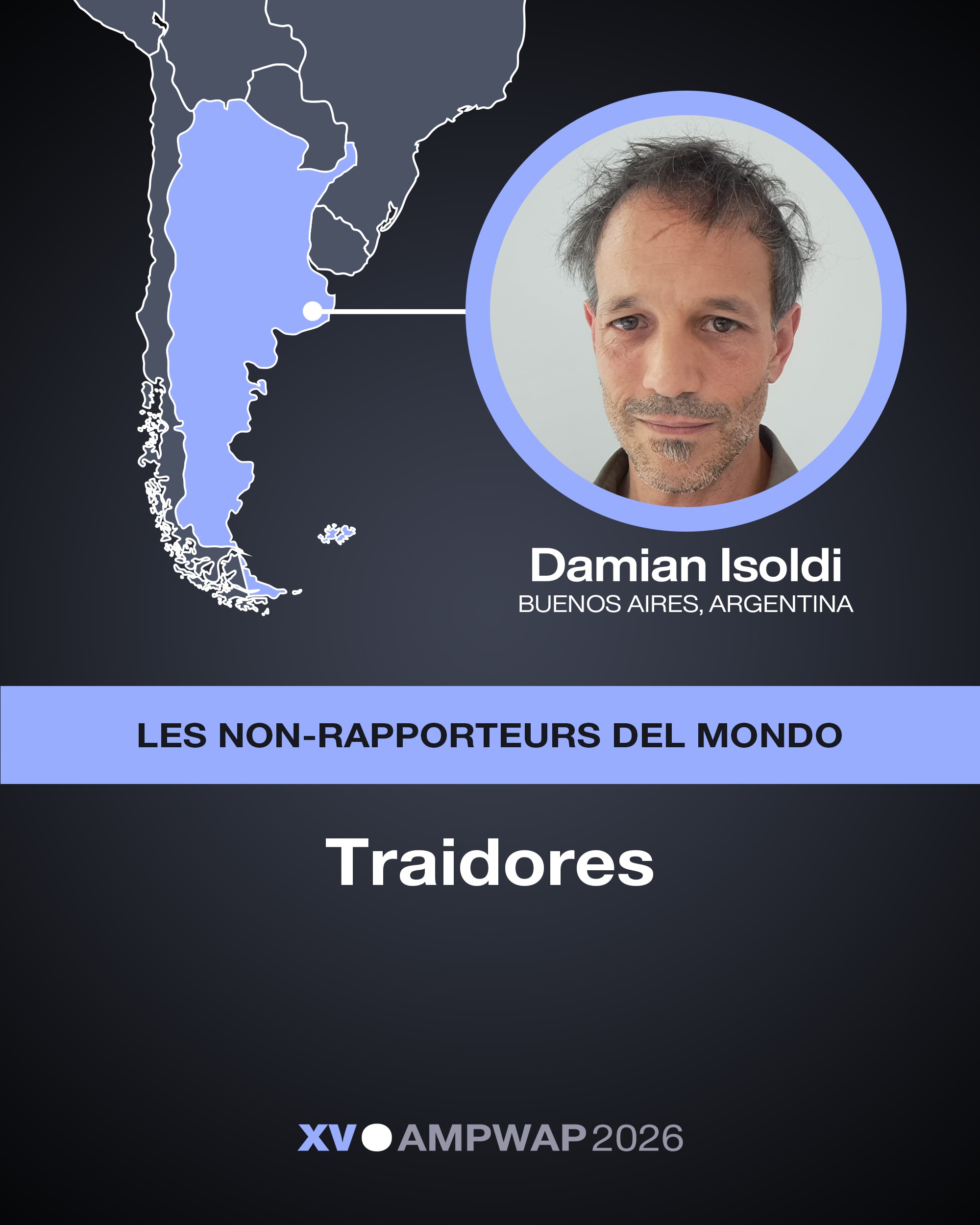
Today, we are witnessing the resurgence of a relationship that was once stated: that of the hero and the traitor. The local situation in Argentina and two literary publications have reignited a debate thought to be outdated.
The situation consists of the public vindication of repressive actions during the last military dictatorship. The publications include "¿Quién entregó a mi viejo?" [Who Betrayed My Old Man?] written by Mario Santucho, son of the leader of the ERP, the largest Marxist guerrilla group in the 1970s—betrayed and murdered the day before his departure into exile—and a theory that explains his father's downfall based on the figure of the traitor; the bestseller La llamada [The Call] by Leila Guerreiro, a chronicle about Silvia Labayru, released in 1978 after being kidnapped and held for two years by the military, who was accused of being a traitor once freed.
A third publication, reissued, offers an interpretation of the period and of the aforementioned publications that are so opposed to one another. This is Ana Longoni's book, Traiciones. La figura del traidor (y la traidora) en los relatos acerca de los sobrevivientes de la represión [Betrayals. The Figure of the Traitor (and the Traitoress) in the Stories of the Survivors of Repression].
Longoni points out the complementary logic that governs two figures—which can take on different names, such as the hero and the traitor, the disappeared and the survivor, the individual path and the collective weft—that responds to an "ancestral binary."2 In response to this, she proposes reflecting on the figure of the traitor outside the logic of war and the common sense of revolutionary morality.
One of the conclusions she reaches that interested me is that outside of binary thinking, there is "the possibility of recognizing how much of the enemy there is in oneself, our grey area."3 She mentions Kilpatrick—Borges' Irish character—as both hero and traitor; a destiny that both redeemed and lost him; and a death that was both triumph and sentence.
Thus, a shift to be read can be identified: from a stated relation, the hero-traitor couple, to the concept of extimacy.
[1] Lacan, J., "L'étourdit," Autres écrits, Paris: Seuil, 2001, p. 455. Unpublished in English.
[2] Longoni, A., Traiciones: La figura del traidor (y la traidora) en los relatos acerca de los sobrevivientes de la represión, Córdoba: Documenta Ediciones, 2024, p. 219. Unpublished in English.
[3] Ibíd.
